
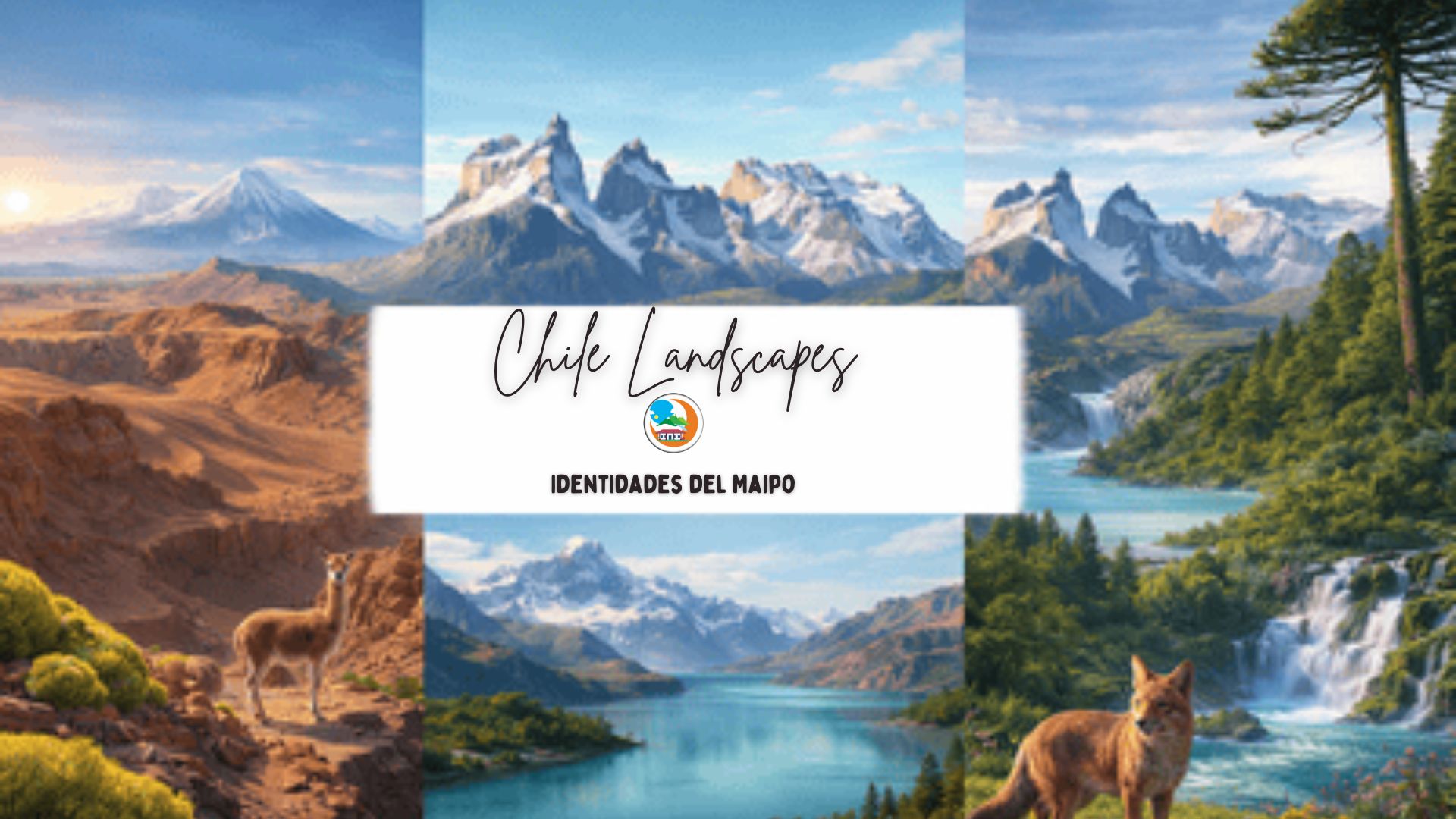
Chilean landscapes, a territory that changes with every step
Chile is a long, narrow country where the landscape changes almost without warning. In just a few kilometers, the desert gives way to green valleys, the mountains meet the sea, and the climate changes completely. This diversity is not accidental, but rather the direct result of its geography.
The Andes mountain range runs through the territory like a backbone. Alongside it, the Coastal Range, the Central Valley, and the coastal plains organize the space and define different ways of inhabiting the country. Altitude, slope, and proximity to the ocean influence each landscape.
The Pacific Ocean also sets the pace for the territory. The Humboldt Current cools the waters of the north and center, creating dry environments and clear skies (Ladera Sur, 2015). Thus, areas far from the equator have arid conditions that surprise those who visit the country.
Chile’s size reinforces these contrasts. The territory stretches from the desert north to the southernmost reaches, incorporating Mediterranean climates, temperate forests, Patagonia, and island territories. There is even a projection toward Antarctica, which further expands its natural diversity.
To travel through the entire landscape of Chile would take more than a lifetime. The distance, contrasts, and diversity make it impossible to cover in a single trip. Even so, this article invites you to take a first look at some of Chile’s most representative landscapes, traveling from north to south through a territory that is constantly changing and never repeats itself.
Where the Chilean landscapes begin: the Andes Mountains in Chile
The Andes Mountains run alongside Chile throughout its entire territory. They are not only a natural boundary, but also a constant presence that shapes the horizon, the climate, and the way of life. In many places, you only need to look up to see the mountains, imposing and silent, reminding you that the landscape is always there.
Santiago grew at the foot of the mountains and today is projected as the capital of mountain tourism. From the city, the high mountains are just a few kilometers away. The Cajón del Maipo is one of its most emblematic access points, a space where rivers, glaciers, volcanoes, and hot springs coexist with small villages and scenic roads (Cabalgatas Chile, 2020). It is a place that changes with the seasons and offers different experiences with each visit.
Cerro el Plomo, the guardian of the valley
Some of the country’s most iconic peaks rise up in the mountain range, although their height varies depending on the area. In the central zone, mountains such as Cerro El Plomo, Tupungato Volcano, and San José Volcano stand out. Further north, in the high mountain range and the altiplano, are Chile’s highest peaks, such as Ojos del Salado Volcano, Nevado Tres Cruces, and Llullaillaco Volcano, all over six thousand meters (Andesgear, 2019). These peaks are home to snow, glaciers, and extreme environments that directly influence the availability of water and the configuration of other landscapes in the country. They also harbor surprising biodiversity, with species adapted to altitude, cold, and low oxygen levels.
Chilean landscapes are not only about biodiversity, they are also deeply connected to culture. Indigenous peoples such as the Aymara, Atacameños, Quechua, Collas, Diaguitas, Pehuenches, and Mapuches developed a spiritual relationship with the mountains here. The discovery of the Child of Cerro El Plomo, at an altitude of over 5,000 meters, reveals the symbolic importance of these peaks. The ancient Qhapaq Ñan (Inca road system) still recalls the passage of the Inca Empire through this landscape.
Today, the Andean experience can be enjoyed in many ways. Ski resorts, trails, active volcanoes, and hot springs, showcase a living mountain range. It is a landscape that continues to transform and invites visitors to explore it with respect and wonder.
Chilean coastal landscapes: life, culture, and sea
The Chilean coastline stretches for more than 4,000 kilometers and accompanies the country from north to south as a constant presence. Here, the Pacific Ocean meets the Coastal Mountain Range, creating cliffs, open beaches, coves, and bays that define some of Chile’s most recognizable landscapes.
Chilean landscapes are as beautiful as they are varied. In the north, cities such as Iquique and Antofagasta combine urban beaches with a strong historical identity linked to saltpeter and port development. Further south, Valparaíso stands out as a World Heritage Site, with its hills, elevators, and a cultural life deeply connected to the sea.
-
Chilean coast y cultural landscapes
Following the coast, the commune of Navidad surprises with its paleontological finds. Here, fossilized mollusks, shark teeth—including megalodon—and cetacean remains have been found, reminding us that this landscape also holds a millennial history (Mezosoico Chileno, 2020). Further south, Pichilemu and Punta de Lobos have become benchmarks for surfing and a coastal culture linked to the wind and waves (Chile es tuyo, 2024).
Chile’s coastal landscapes also include a network of wetlands that play a key role in biodiversity. Places such as the wetlands of Coronel or Valdivia, communes that are home to dozens of these ecosystems, are resting places for migratory birds that travel thousands of kilometers and find refuge and food here.
In Chiloé, the sea mixes with the imagination. Legends such as the Caleuche, a ghost ship that appears in the fog, or the Pincoya, a spirit of the sea who ensures the abundance or scarcity of resources, reflect the deep relationship between the community and the ocean (Humedales Chiloé, 2021)
The coastal experience is not complete without stopping at a fishing village. There, artisanal fishing and local cuisine are enjoyed at a leisurely pace. A bowl of conger eel stew by the sea or a freshly prepared “chupe de locos” connect the landscape with the senses and make the Chilean coast memorable long after the trip is over.
Chilean desert landscapes: culture and contemplation
Now that we have traveled to the eastern and western extremes of the country, it is time to move from north to south. To do so, we must stop at one of Chile’s most impressive landscapes: the desert.
In the north of the country lies the Atacama Desert, recognized as the driest in the world. Its mineral landscape, intense colors, and profound silence create an experience that is difficult to forget (Chile Travel, 2024). This territory is not only extreme nature, but also a cultural landscape. Since pre-Hispanic times, indigenous peoples such as the Aymara, Atacameños, and Quechua learned to inhabit this challenging environment. Later, the desert was the scene of one of the most intense chapters in Chile’s modern history, with the rise of saltpeter. Today, old offices such as Humberstone and Santa Laura, declared World Heritage Sites by UNESCO, allow visitors to explore life in the pampas and understand the importance of the so-called “white gold”. (UNESCO, 2019)
-
Natural beauty of the desert
Although it may seem contradictory, the desert is home to unique biodiversity. Guanacos, foxes, lizards, specialized insects, and various cacti have developed surprising adaptations to survive. Exceptionally, when the rain comes at just the right time, the desert blooms. For a few weeks, the arid soil is covered with brightly colored flowers, completely transforming the landscape. It is a brief and fragile phenomenon, as unexpected as it is exciting, reminding us how alive this seemingly motionless land can be.
Northern Chile is also a privileged destination for astro-tourism. With clear skies most of the year, low humidity, and little light pollution, places like the Elqui Valley, San Pedro de Atacama, and observatories such as ALMA, Paranal, and Mamalluca offer some of the best views of the universe (Subsecretaría de Turismo, 2024)
And if that weren’t enough, northern Chile surprises visitors with natural landscapes that invite deep contemplation. Those who travel through these territories often share the same feeling: that of being in a different world, where time seems to move at a different pace. Places such as the Valley of the Moon, the Tatio geysers, the Salar de Atacama, and the Red Lagoon complete a setting that invites you to stop, observe, and feel (Chile Travel, 2024). Because in the Chilean desert landscapes, the journey is not measured in kilometers, but in sensations that linger long after you leave.
Chilean landscapes: central and Mediterranean regions
The central zone of Chile is the most populated and transformed territory in the country. Here, nature coexists directly with everyday life, creating a recognizable and familiar landscape. From a geomorphological point of view, central Chile is organized into four major systems. These are the Andes Mountains, the Central Depression, the Coastal Range, and the Coastal Plains (Olave, 2004). Its temperate climate, with distinct seasons, is one of the few Mediterranean climates in the world. This condition explains much of its human occupation.
The Mediterranean landscape is expressed in sclerophyllous scrub, gentle hills, rivers, and fertile valleys. To the south, there are more humid and wooded areas. Vineyards in Maipo, Casablanca, and Colchagua coexist with natural areas such as La Campana, Río Clarillo, and Altos del Lircay. Places such as Cajón del Maipo, Olmué, Lago Rapel, and Vichuquén allow you to travel from the city to direct contact with nature in just a few hours. As you move towards Maule and Ñuble, denser vegetation, mighty rivers, and inland lakes emerge. This transition marks a smooth but clearly perceptible change in the landscape. (GoChile, 2011)
-
Cultural landscape: a historical journey
In central Chile, from the agricultural valley to Biobío, culture is deeply linked to the land. It is also closely tied to the daily lives of its inhabitants. In the Metropolitan Region, Santiago combines historic centers, heritage neighborhoods, museums, and urban parks. These interact with the mountains and city life.
In O’Higgins, landmarks such as Sewell and the “Ruedas de Larmahue” reveal the valley’s mining and agricultural history. Towns such as Lolol preserve traditional architecture and an active rural lifestyle. This is expressed in the media luna (half moon), rodeos, Chilean horse races, and threshing with loose mares. These practices have given the area the label of “Tierra Huasa” (Land of the Huasa). In Maule, the rural and heritage character is experienced in towns such as Vichuquén, declared a typical zone. It is also expressed in the Talca–Constitución branch line, a train journey that travels through landscapes, towns, and memories of the valley. Added to this are places such as Huilquilemu, which preserve history, art, and traditions. (Chile esTuyo, 2021)
Further south, Ñuble contributes identity from Chillán, with its cathedral and artistic expressions. Rural communities such as Ninhue also stand out, where petroglyphs connect visitors with ancient human occupations. Finally, in Biobío, the cultural tour invites visitors to discover Contulmo. There, its circuit of heritage houses with German influence stands out. The Mapuche Museum in Cañete is a key place for understanding the history, worldview, and cultural relevance of the Mapuche people. (Chile es Tuyo, 2021)
This tour of the central region reveals how Chilean landscapes are not only observed, but also experienced. Nature, history, and culture intertwine in everyday settings. Each valley, town, and tradition builds a deep identity, where the land remains an essential part of life and collective memory.
Chilean landscapes and the magic of the south
Southern Chile is known for its abundance of water and intense greenery, which is why these areas are known as the Los Ríos and Los Lagos regions. Here, the landscape seems to breathe moisture, calm, and depth.
The journey begins with glaciers and active volcanoes, where crystal-clear rivers and hot springs originate. From the mountains, the water descends in waterfalls, rapids, and deep lakes. Pucón, Villarrica, Coñaripe, Panguipulli, and Llanquihue concentrate this living energy (Chile Travel, 2024). Activities such as kayaking, rafting, hiking, and mountain biking allow you to explore the territory following the course of the water. Further west, southern wetlands and coastlines receive these flows, creating refuges for birds and wildlife. The constant sound of water accompanies every journey, and the Chilean landscapes of the south invite you to slow down and observe.
-
The cultural Chileans landscapes
It is diverse and deeply connected to nature. On Lake Budi, Mapuche communities maintain traditions linked to water and the land. On the island of Chiloé, cultural tourism is emerging as a real opportunity for community development and preservation of heritage (Subsecretaría de Turismo y CONADI, 2021). In cities such as Puerto Varas, German influence is evident in the architecture, cuisine, and relationship with the lakes. These Chilean landscapes reflect living identities, not museums.
Melipeuco has established itself as the trekking capital of the south. Trails such as Garganta del Brujo reveal a geological heritage recognized internationally by UNESCO (Melipeuco Capital del trekking, 2024). National parks such as Conguillío, Villarrica, Alerce Andino, and Vicente Pérez Rosales protect unique forests, volcanoes, and lakes. Huilo Huilo stands out as a model of conservation and responsible tourism.
Southern Chile is not a place to rush through. It is a place to walk, listen, and feel. Its landscapes teach us that water not only shapes the land, but also the way we inhabit it.
Chilean landscapes: southern region and Patagonia
Extreme Patagonia and the Magallanes Region represent the vastest scale of Chilean landscapes. Here, immensity, silence, and nature that still feels untouched dominate. Constant winds, open steppes, deep fjords, and imposing glaciers create a feeling of remoteness and constant wonder.
The journey along the Carretera Austral is an amazing experience. From Puerto Montt, the route continues to Cochamó, known for its natural water slides and mountainous surroundings. Hornopirén surprises with national parks and evergreen forests, while Chaitén marks the entrance to an area dominated by volcanoes and protected areas. Futaleufú stands out for its world-class rafting and turquoise rivers. Puyuhuapi and Puerto Cisnes invite you to take a break, the latter renowned for its traditional Fried Fish Festival (Rewilding Chile, 2021).
Coyhaique is the main urban center in the region, before continuing to Cerro Castillo, one of Patagonia’s most iconic trekking destinations. Puerto Río Tranquilo dazzles with the Marble Cathedrals, a unique geological attraction, and Glacier Explorers. Further south, Guadal and Chile Chico express a strong gaucho culture with Argentine influence, where horseback riding is still part of local life. Puerto Bertrand, Cochrane, Caleta Tortel and its boardwalks, and Villa O’Higgins close the tour, with access to Mosco Glacier Park (Rewilding Chile, 2021).
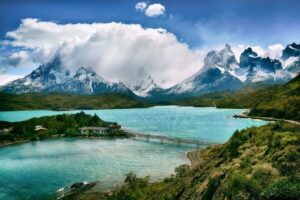
From this area, it is possible to continue by barge to Puerto Natales. There, you can visit the Milodon Caves, Torres del Paine National Park, and marine wildlife viewing areas. Punta Arenas complements the experience with European architecture, historical museums, the Municipal Cemetery, and the Fuerte Bulnes Site, reflecting the history of livestock farming and immigration. Further south, Chilean Antarctica offers extreme and regulated tourism, with glaciers, unique wildlife, and scientific bases, consolidating the definitive closure of Chilean landscapes at the end of the world (Chile Travel, 2021).
-
Island territory: a jewel of the Chilean landscape
The island territory expands the idea of Chile beyond the continent. These islands are marked by isolation, the sea as their lifeline, and a deep and diverse identity of their own. These Chilean landscapes invite you to travel slowly and attentively.
Isla Damas, off the north coast, stands out for its transparent waters and marine fauna visible from the surface. The sighting of dolphins, penguins, and coastal birds defines a brief but intense experience, dominated by color and silence (Visit Chile, 2025).
Another of the best-known islands is Rapa Nui, which represents one of the most unique cultural landscapes in the world. Its volcanic origin, the moai, and the Rapanui worldview coexist with activities such as trekking, diving, and snorkeling in an environment of high endemism and deep ancestral respect.
Closer to the mainland, the Juan Fernández archipelago offers a rugged, oceanic landscape. Robinson Crusoe surprises visitors with the Cerro Centinela viewpoint, the Tierras Blancas sea lion colony, and challenging trekking routes. The even more remote Alejandro Selkirk Island reinforces the feeling of extreme isolation. In front of the Bíobío region, Mocha Island combines forest, sea, and historical memory. Its biodiversity and tranquility make it ideal for hiking, bird watching, and small-scale nature tourism, with strong community ties (Visit Chile, 2025).
Chiloé adds cultural layers to the island landscape. Stilt houses, heritage churches, living mythology, and wetlands coexist with kayaking routes, inland navigation, and coastal trails, where rain and greenery envelop everything. Finally, the islands and channels of Patagonia form a labyrinth of fjords, glaciers, and mountains. Here, scenic sailing, kayaking, and various cruises allow you to explore remote, fragile, and deeply moving Chilean landscapes (Viaja Rural Chile, 2024).
An invitation to discover our corner of the world
Traveling through Chile means passing through a succession of landscapes that change in shape, color, and rhythm. From the desert to the southern ice fields, the territory invites you to observe, listen, and pause. Each area reveals a different relationship between nature and human life, marked by the climate, history, and local culture.
Chilean landscapes are not only to be seen, but also to be lived. They are explored on foot, by rivers, roads, seas, and ancient trails. Traditions, biodiversity, and memories that are still alive coexist in them. Traveling through Chile is to understand that the landscape is identity, refuge, and shared experience.
This journey is an invitation to travel with respect and curiosity. To appreciate the natural and cultural diversity that defines the country. To discover that, in every corner, Chilean landscapes offer more than just beauty: they offer meaning, connection, and lasting wonder.